SoftNest Journal
A Practical Newborn Sleep Setup (Without Overbuying)
A grounded guide to building a safe, calm newborn sleep setup without filling the nursery with unnecessary gear.
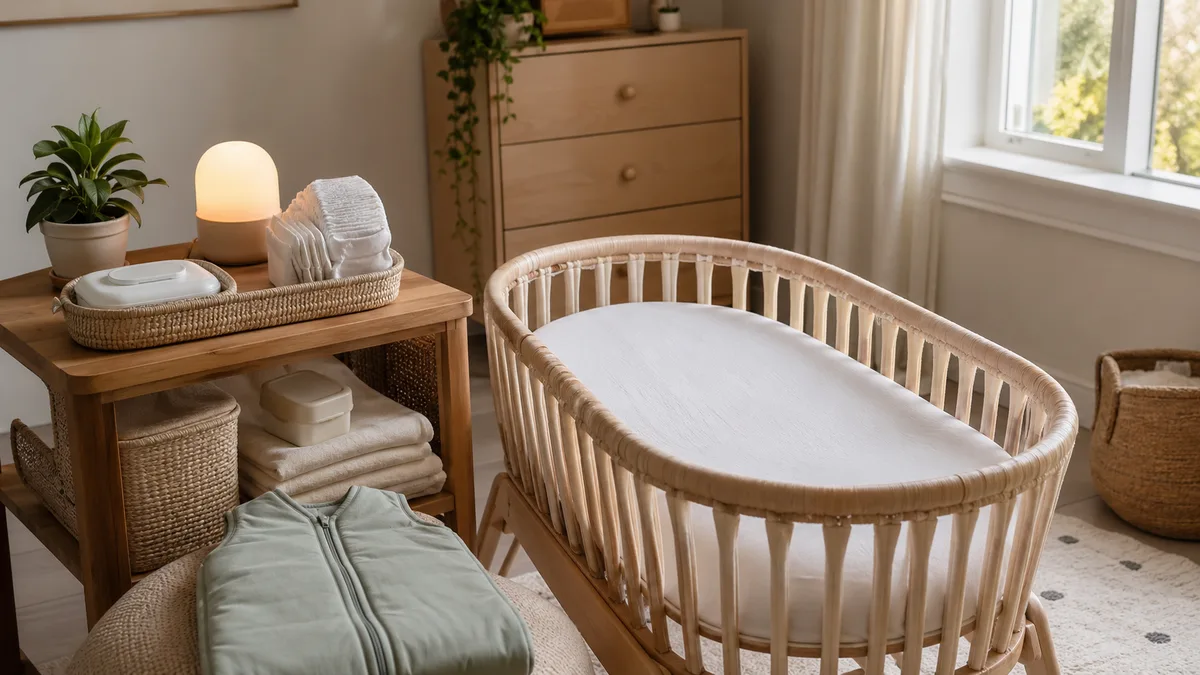
A Practical Newborn Sleep Setup (Without Overbuying)
Newborn sleep has a way of making sensible adults buy strange things.
You start out wanting a safe, calm setup. Then you spend enough time online and suddenly the room appears to require six gadgets, three separate sleep surfaces, a decorative canopy, a machine that glows softly in seven colours, and a product described as “revolutionary” by someone who has clearly never tried to reassemble a fitted sheet at 3 a.m.
The truth is duller and more useful.
A practical newborn sleep setup is usually quite simple. Safe sleep guidance from Health Canada boils the basics down cleanly: baby on their back, in their own crib, cradle, or bassinet, on a firm mattress with a fitted sheet, with the sleep space otherwise empty. No loose blankets. No pillows. No stuffed animals. No extra decor in the sleep space.
That is the foundation. Everything else should support that, not compete with it.
What You Actually Need First
The first layer of the setup is the sleep surface itself.
That means:
- a crib, cradle, or bassinet that meets current safety requirements
- a firm mattress that fits properly
- two or three fitted sheets so one bad night does not wreck the entire system
That is not glamorous. It is still the part that matters most.
The second layer is the routine around the sleep surface. You need enough support nearby that night feeds and diaper changes do not turn into a full house expedition.
That often means:
- a dim light or lamp that does not fully wake the room
- diapers and wipes stocked in one obvious place
- burp cloths within reach
- a simple chair or spot for feeding if you use one regularly
It is astonishing how much easier nights feel when the setup asks you to make fewer decisions.
What to Skip, Even If It Looks Lovely in Photos
This is where a lot of money gets wasted.
I would skip anything that complicates the sleep space or relies on the idea that prettier must mean better.
That includes:
- loose blankets in the crib
- pillows or plush items in the sleep space
- anything hanging directly over the crib
- decorative extras that crowd the sleeping area
- expensive gadgets you do not actually understand or need
Health Canada’s nursery guidance is also very clear that the crib should be away from artwork, cords, canopies, tents, windows, and other hazards. That means it is entirely possible to have a nice-looking nursery without turning the crib wall into a stage set.
Sleep Clothing Matters More Than Decor
If you are trying to make nights feel easier, sleep clothing is more useful than decorative add-ons.
A wearable sleep layer helps because it keeps the routine more consistent and avoids the loose-bedding problem. That is why the HALO Cotton Sleepsack Swaddle is the sort of product I would look at before almost any nursery “must-have.”
It supports the same goal as the rest of a good sleep setup: simple, repeatable, safe.
The trick is not to buy every sleep product on the market. The trick is to choose one or two pieces that make bedtime easier without turning the room into a storage problem.
The Room Itself Should Calm Things Down
A newborn’s room does not need to be silent or perfect. It just needs to stop making the situation worse.
That means the room should be set up to reduce friction. Softer light in the evening helps. Clutter reduction helps. Keeping the essentials together helps. If noise from the rest of the house keeps knocking the baby out of sleep, a steady background sound can also help create a more predictable environment.
That is where the Dreamegg D1 Nova Sound Machine fits in. Not as a miracle sleep fix, but as one useful cue in a calmer bedtime rhythm.
We get into that more directly in Newborn Sleep Struggles? This Simple Change Made Nights Easier, but the short version is this: sound helps most when the rest of the setup already makes sense.
Set Up the Night in Zones, Not in Chaos
This is the practical part that saves people more grief than any sleep gadget.
Think in zones.
Your sleep zone is the safe sleep surface.
Your change zone holds diapers, wipes, cream, and spare clothes.
Your feed zone is whatever chair, side table, bottle area, or nursing setup you use most often.
The fewer items travel around the room every night, the better. It reduces noise, fumbling, and the strange anger that comes from not being able to find the one clean sleeper you were certain existed.
What Overbuying Usually Looks Like
Overbuying does not always mean you bought expensive things. Often it means you bought too many versions of the same idea.
Multiple swaddles before you know what your baby likes. Too many sleep gadgets before you know what your room actually needs. Too much decorative nursery gear that serves no sleep function at all.
A better approach is to start with the safe essentials, then add one practical improvement at a time if a real problem shows up.
Baby keeps startling awake? Look at sleep clothing or the room routine.
Household noise is a problem? Consider background sound.
Night feeds feel chaotic? Rework the feeding and changing stations.
That is smarter than buying the whole internet in advance.
Keep the Crib Wall Safe, Not Busy
One detail that gets lost in nursery planning is the wall right around the crib.
People often want that wall to be the prettiest part of the room, which is understandable, but the sleep space should still stay clear of anything heavy, dangling, or unnecessary. A nursery can look warm and finished without turning the crib area into a display zone.
That is another reason I prefer simple room updates over decorative overkill. Let the art, decals, or shelving live where they support the room rather than where they interfere with the sleep space. A newborn setup works best when the nice-looking decisions and the safe decisions are still the same decisions.
What I Would Prioritize in the First Eight Weeks
If I were keeping the list short, it would look like this:
- one safe sleep surface with fitted sheets
- one practical swaddle or wearable sleep layer
- one dim light for night use
- one organized spot for diapers and feeding essentials
- one calm, repeatable bedtime sequence
That is enough to begin.
You can add later if you discover a real need. Most families do better that way than they do by trying to solve every possible sleep issue before the baby has even arrived.
What a Practical Setup Feels Like
This is the part worth focusing on.
A practical sleep setup feels easy to use when you are tired. You do not have to think too much. You do not have to move too much. The room supports the routine instead of interrupting it.
That is what you are aiming for.
If you want to go deeper on the room environment side, read Newborn Sleep Struggles? This Simple Change Made Nights Easier. If you want the sleep clothing piece, the HALO Cotton Sleepsack Swaddle is the related product I would pay attention to first.
You do not need a perfect nursery. You need a setup that stays calm when you are not.
Keep reading
Two useful next stops.
2026-07-28
Newborn Safe Sleep: Check These Four Things Every Time
A globally useful safe-sleep guide covering back sleeping, firm flat surfaces, clear sleep spaces, room-sharing, swaddling, overheating, travel and tired nights.
2026-08-23
Starting Solids? What to Know About Using a High Chair Safely and Choosing One That Fits Real Life
A practical guide to when babies are ready for a high chair, which safety features matter most, how to keep cleanup manageable, and whether a convertible model is worth considering.