SoftNest Journal
Car Seat + Stroller Compatibility: What to Check Before You Buy
A practical compatibility checklist for car seats and strollers, with a focus on Canadian safety basics and everyday use.
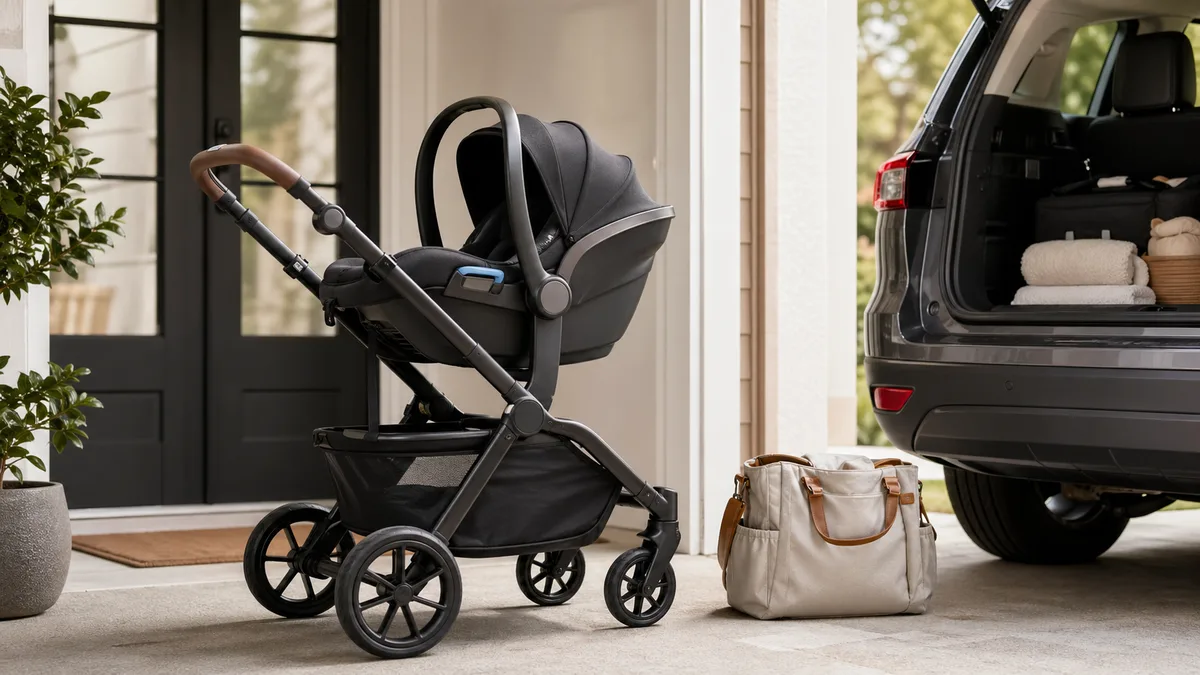
Car Seat + Stroller Compatibility: What to Check Before You Buy
This is one of the easier ways to spend a lot of money and still create trouble for yourself.
Parents buy a stroller. Parents buy a car seat. The marketing language around “travel systems” and compatibility sounds reassuring enough that everyone assumes the pieces will work together somehow. Then the adapters are different, the fold is awkward, the boot space disappears, and the whole setup becomes more complicated than it looked under showroom lighting.
That is why compatibility checks matter.
Transport Canada’s guidance on child-seat use is refreshingly plain: always follow the manufacturer’s instructions. It sounds basic, but it is exactly the point. Compatibility is not something you should infer from vibes, a similar brand name, or a product page that implied a little too much.
If you are building a stroller-plus-car-seat setup, there are a handful of checks that save a great deal of grief.
1. Confirm the Exact Model Compatibility
Not “the same brand.”
Not “looks similar.”
Not “someone in the reviews said it worked.”
The exact model.
If a stroller requires adapters, confirm the adapters exist for the precise seat you plan to use. If it is sold as part of a system, still read the instructions rather than assuming the display model tells the whole story.
This is the most common expensive mistake because people are tired, the gear names sound alike, and every product page seems emotionally invested in telling you the setup is easy.
2. Make Sure the Car Seat Itself Is Appropriate and Legal for Use in Canada
This is not the place for shortcuts.
Transport Canada requires child seats sold here to meet Canadian standards. That means you should be looking for the National Safety Mark and using the seat according to the instructions and the child’s height and weight limits.
If you are shopping for a long-term seat rather than an infant bucket seat, the Graco 4Ever Convertible Car Seat is one example of the kind of product families consider when they want something built for multiple growth stages. It is not a travel-system infant seat, but it is a useful reminder that the seat decision and stroller decision are related without always being the same decision.
3. Check Whether the Fold Still Works for Your Actual Life
This is the check people do last, if at all.
A stroller can be perfectly compatible on paper and still be annoying in practice if the fold is awkward, the frame is too bulky for the car, or lifting it in and out becomes irritating fast.
Ask the ordinary questions:
- can you fold it without needing both hands and a small prayer
- does it fit in your vehicle with the rest of your normal cargo
- is the weight manageable for the caregiver who will use it most
- if adapters are involved, do they make the whole setup more awkward than you expected
That is why I like pairing this article with What Actually Makes a Stroller Practical for Everyday Family Life. Compatibility is not only about whether the pieces connect. It is about whether the resulting setup is tolerable to live with.
4. Think About the Surfaces You Actually Use
A stroller that behaves beautifully on polished shop flooring can become less impressive on cracked sidewalks, slushy corners, uneven curb cuts, or long parking-lot walks.
That is one reason a stroller with a decent canopy, workable basket, and sensible everyday handling matters more than people first realize. The Maxi-Cosi Tayla Max Stroller is a useful reference point because the practicality features are the kind parents notice quickly in daily use: recline flexibility, storage, and coverage.
Again, the goal is not to buy the most exciting gear. The goal is to buy gear you will not resent by month three.
5. Do Not Forget the Bag and Cargo Problem
You are not just pushing a stroller and clipping in a seat. You are also hauling diapers, wipes, bottles, spare clothes, and whatever else the day now requires.
That means the bag matters too.
If the stroller basket is awkward and the diaper bag is chaotic, the whole setup gets clumsy. That is why the Diaper Bag Backpack with Changing Pad belongs in the same planning conversation. The travel system is never just wheels plus seat. It is the whole outing system.
6. Watch for the Difference Between “Works” and “Works Well”
This is where parents often compromise more than they should.
A seat may technically attach. A stroller may technically fold. The pieces may technically fit in the car. But if every use feels fiddly, heavy, or irritating, that is still bad compatibility in practice.
The real test is whether the system works cleanly enough that a tired parent can use it repeatedly without turning every outing into a sequence of little annoyances.
That standard is much better than “well, it sort of clicks in.”
7. Do a Dry Run Before You Ever Need It
This is one of the simplest checks and one of the most useful.
Before the baby arrives, or at least before you depend on the setup for a real outing, try the whole routine once. Fold the stroller. Lift it into the car. Attach the seat or the adapters. Check the basket access. Put the diaper bag where it will actually go. See what happens when the car boot already contains the ordinary junk of life.
That quick rehearsal is often where the hidden irritations show up. A system that seems fine in theory can become a nuisance very quickly once you add time pressure, weather, and a baby who is not interested in your troubleshooting process.
What I Would Not Assume
I would not assume a premium brand guarantees an easier setup.
I would not assume “travel system compatible” means broadly universal.
I would not skip the manual and rely on memory from a shop demo.
And I would not forget that children should not be left to sleep unsupervised in car seats outside their intended travel use. A car seat is a restraint system, not a substitute for a crib or bassinet.
The Best Compatibility Check Is a Boring One
That is the funny part.
The best compatibility decision usually feels slightly boring because it is built on ordinary details: exact model numbers, folded dimensions, weight limits, vehicle fit, storage, and ease of use.
That is not a bad sign. It is the sign you are shopping like someone who will actually be using this gear.
If you are comparing your options now, start with the manuals, confirm the exact combination, and look at the day-to-day practicality rather than the glossy promise. Then read What Actually Makes a Stroller Practical for Everyday Family Life and make sure the rest of the outing setup, including the diaper bag, fits the same reality.
That is how you avoid buying two good products that create one annoying system.
Keep reading
Two useful next stops.
2026-03-09
What Actually Makes a Stroller Practical for Everyday Family Life
A realistic guide to stroller practicality, from canopy and storage to compatibility, folding, and day-to-day use.
2026-03-20
How to Warm Baby Milk Safely Without Turning It Into a Guessing Game
A practical look at bottle warming, safe milk handling, and the small setup changes that make night feeds easier.