SoftNest Journal
Batch-Cook and Freeze Baby Food: A Realistic Way to Simplify Your Week
A practical guide to making homemade baby food once and freezing it in individual portions—what it saves you, what it doesn't, and how to thaw and reheat safely.
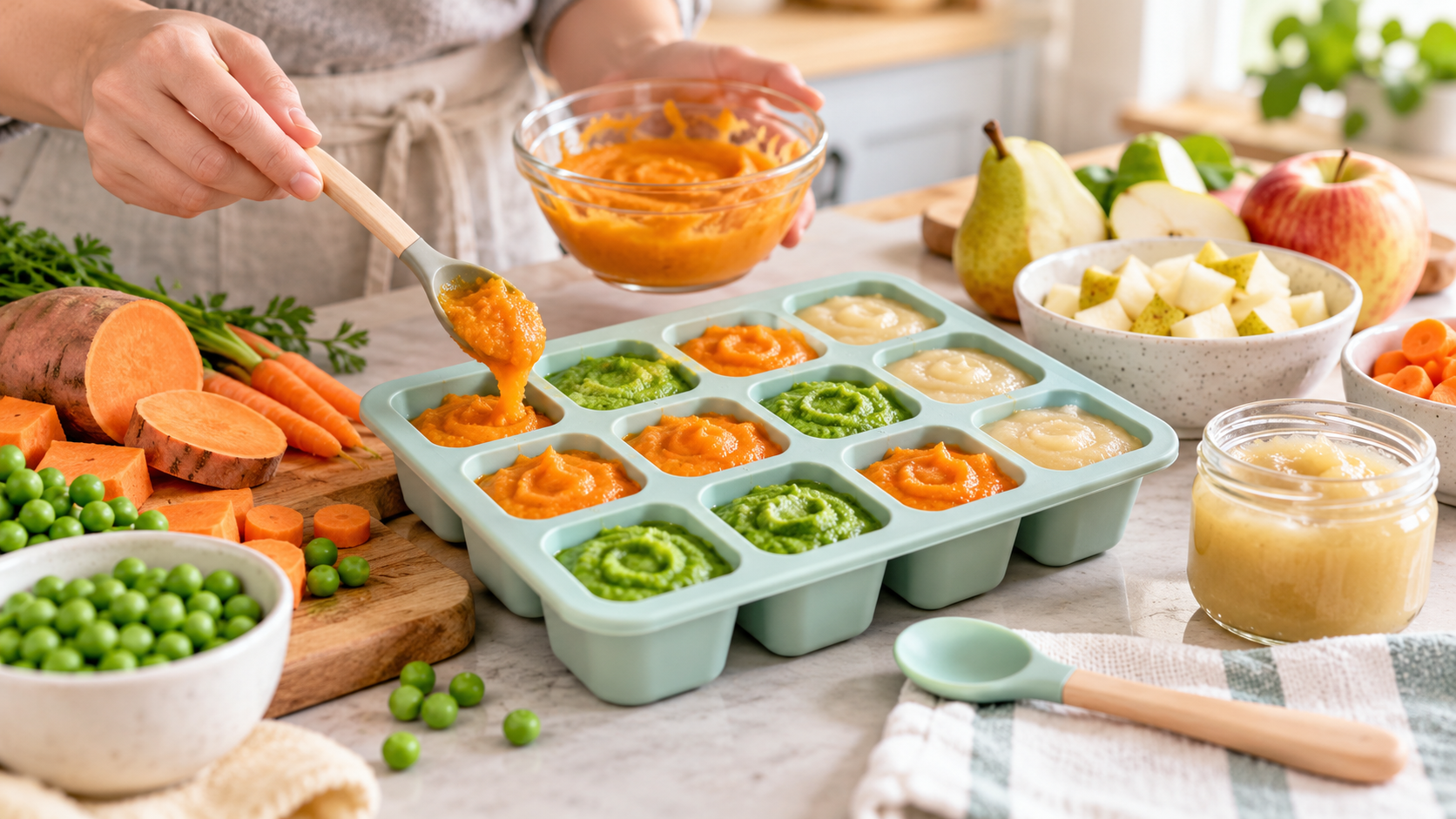
Starting solids is exciting. New flavors, new textures, the faces your baby makes when they try something unexpected.
Then comes the part parents discover quickly: your baby eats a tiny amount, but making that tiny amount can still take a lot of work.
You wash. You chop. You steam. You blend. You serve a few spoonfuls. And tomorrow, you do it all again.
If you like making homemade baby food but don't have the time or energy to prepare it fresh at every meal, batch-prepping and freezing portions can help. Cook a larger batch, divide it into small servings, freeze, and take out only what your baby needs.
That's the job a product like the WeeSprout Silicone Baby Food Freezer Tray is built for.
The Problem: Homemade Baby Food Can Become One More Daily Task
Making your own food gives you more control over what goes in it, and it's a good way to use ingredients you already have.
But parents already have a lot going on: bottles, naps, diaper changes, laundry, work, appointments, older children, meals for everyone else—and somehow the baby is hungry again.
You may start with good intentions to make fresh purée daily, but eventually it can feel like another job. And because babies eat such small portions early on, you may end up with more food than they can finish.
Instead of throwing the extra away, freezing individual portions gives you another option.
The Solution: Prep Once, Freeze Individual Portions
The idea is simple. Make a bigger batch at once—sweet potato, carrot, squash, peas, apple, pear, mango, lentils, appropriately prepared meat and vegetables, or combinations your baby already enjoys—then portion it into a freezer tray.
The WeeSprout Silicone Baby Food Freezer Tray has individual compartments, so you freeze small portions instead of one large container. WeeSprout's 1.5 oz version has ten compartments with smaller measurement markings and a clip-on lid for freezer storage.
Once frozen, you can take out the amount you need rather than thawing the whole batch. That's where the real convenience lives.
Why It Works for Busy Parents
Say you make several servings of sweet potato purée on Sunday. On Monday, Tuesday, and Wednesday, you already have individual portions in the freezer. When you need one, take it out, thaw it safely, heat it if appropriate, check the temperature, and serve.
You haven't stopped making homemade food. You've changed when you do the work. That helps on days when you're tired, the baby is hungry, and you really don't want to wash another pot and blender.
Health Canada's general meal-prep guidance also recommends batch cooking and freezing food in meal-size portions as a way to save time and money.
It Can Also Reduce Food Waste
Portions can be unpredictable. One day your baby loves carrots. The next day they take two bites and call it done.
Freezing in smaller portions means you don't have to defrost a large container every time. Start with one portion and prepare more if your baby is still hungry. That makes it easier to use what you've made instead of repeatedly throwing away large amounts of uneaten food.
It Makes Variety Easier
Your freezer can slowly become your own little baby-food menu: carrot portions, sweet potato, pear purée, pea purée, chicken and vegetables. Then you can choose different foods across the week without cooking every one that day.
As your baby progresses, you can combine foods they've already tried safely—sweet potato with lentils, pear with oatmeal, chicken with vegetables, or avocado added fresh to a thawed vegetable portion. It keeps feeding flexible without making it complicated.
Why the WeeSprout Freezer Tray Fits This Routine
The WeeSprout Silicone Baby Food Freezer Tray is designed around portioning food for babies and toddlers. The 1.5 oz version includes ten individual compartments, measurement markings, flexible silicone to help portions release, a reinforced base, and a clip-on lid that helps protect the food in the freezer. According to WeeSprout, the tray is top-rack dishwasher safe.
Practically, that means you don't need ten separate little containers to freeze ten small servings. You prepare, portion, cover, and freeze.
See the WeeSprout Baby Food Freezer Tray →
The Pros
You save time during the week
This is probably the biggest advantage. One cooking session yields several portions instead of repeating the same prep daily.
You always have something available
Days when you haven't grocery shopped, you're tired, or dinner is running late get easier when baby's food is already prepared.
Portions are easier to manage
Individual compartments let you take out smaller amounts instead of freezing one large container.
It may reduce waste
You can thaw what your baby will actually eat rather than preparing a full bowl every time.
You can prepare variety ahead
Several fruits, vegetables, or meals in the freezer give you options throughout the week.
It can save money
Batch-prepping can help you use ingredients you already buy for the household instead of relying entirely on individually packaged baby foods.
The Cons—Because It Isn't Perfect for Every Family
You still have to do the prep
A freezer tray doesn't cook the food. You still wash, prepare, cook, mash or blend, portion, and clean up. The benefit is doing more of that work at once rather than repeating it every day.
You need freezer space
If your freezer is already packed, several trays may be hard to manage. Once portions are completely frozen, some parents transfer them to labeled freezer-safe storage to free up the tray for another batch.
Not every food freezes equally well
Texture can change after freezing and thawing. Some foods come back almost as they were; others may become more watery or soft.
You need to keep track of what you made
Once you have several foods frozen, it's surprisingly easy to forget what that orange cube was. Carrot? Sweet potato? Squash? Labeling the food and date makes the system much easier.
What About Thawing and Reheating?
This part matters, especially for babies and young children.
Health Canada recommends refrigerating or freezing leftovers promptly rather than leaving perishable foods at room temperature for long periods. Frozen leftovers can be thawed in the refrigerator or microwave, and reheated leftovers should reach 74°C / 165°F. Health Canada also advises against reheating the same leftovers more than once.
For baby food, remove the frozen portion from the tray and transfer it to an appropriate container for thawing or reheating rather than automatically heating the entire silicone tray. Always stir heated food thoroughly and check the temperature before offering it, because microwaves can create hot spots. And if food has already been served and contaminated with baby's saliva, don't put the leftovers back into your batch storage.
Is a Baby Food Freezer Tray Actually Necessary?
Necessary? No. Helpful? For the right parent, very much so. You could freeze baby food in other freezer-safe containers. What a portion tray gives you is convenience: smaller servings already prepared, instead of opening a large frozen container and guessing how much you need.
During a stage when you're constantly thinking about naps, bottles, diapers, appointments, groceries, and laundry, removing even one repetitive decision from the day can help.
Who Would Benefit Most?
A baby food freezer tray makes the most sense for parents who:
- enjoy making homemade baby food
- want to meal-prep instead of cooking every day
- are beginning the starting-solids stage
- have a baby who eats small portions
- want to reduce food waste
- want easy meals available for busy days
- prefer knowing exactly what went into baby's food
It can also work alongside a baby food maker: make the food → portion it → freeze it → take out what you need later. That's a more realistic routine for many parents than making every single meal from scratch.
Final Thoughts
Making homemade baby food doesn't have to mean steaming and blending tiny portions every day. Sometimes the easiest way to make something sustainable is to make it simpler: prepare a bigger batch when you have time, freeze it in small portions, and on the busy days—or the days when you simply don't feel like cooking another thing—you already have something ready for your little one.
The WeeSprout Silicone Baby Food Freezer Tray doesn't magically make parenting less busy. But it can take one repetitive job and make it a little easier. And sometimes, that's exactly the kind of baby product worth having.
Make Baby Food Prep Easier—See the WeeSprout Freezer Tray →
This post may contain affiliate links. If you purchase through one of these links, we may earn a commission at no additional cost to you.
Health and safety note: This guide is general education, not individualized medical or feeding advice. Follow current guidance from your local health authorities and your child's healthcare team, including any location-specific rules on food preparation, storage, and infant feeding. Seek urgent care if your child shows signs of choking, an allergic reaction, or serious illness.
Keep reading
Two useful next stops.
2026-07-11
More First Foods, Fewer Kitchen Sessions
How a dual-layer steam-and-blend baby food maker can reduce repeat prep, keep textures flexible, and help families offer variety without cooking all day.
2026-07-04
What Actually Makes a High Chair Good for Family Meals?
A practical guide to high-chair support, adjustability, cleanup, footprint, and whether the Momcozy DinerPal earns a place at your table.