SoftNest Journal
More First Foods, Fewer Kitchen Sessions
How a dual-layer steam-and-blend baby food maker can reduce repeat prep, keep textures flexible, and help families offer variety without cooking all day.
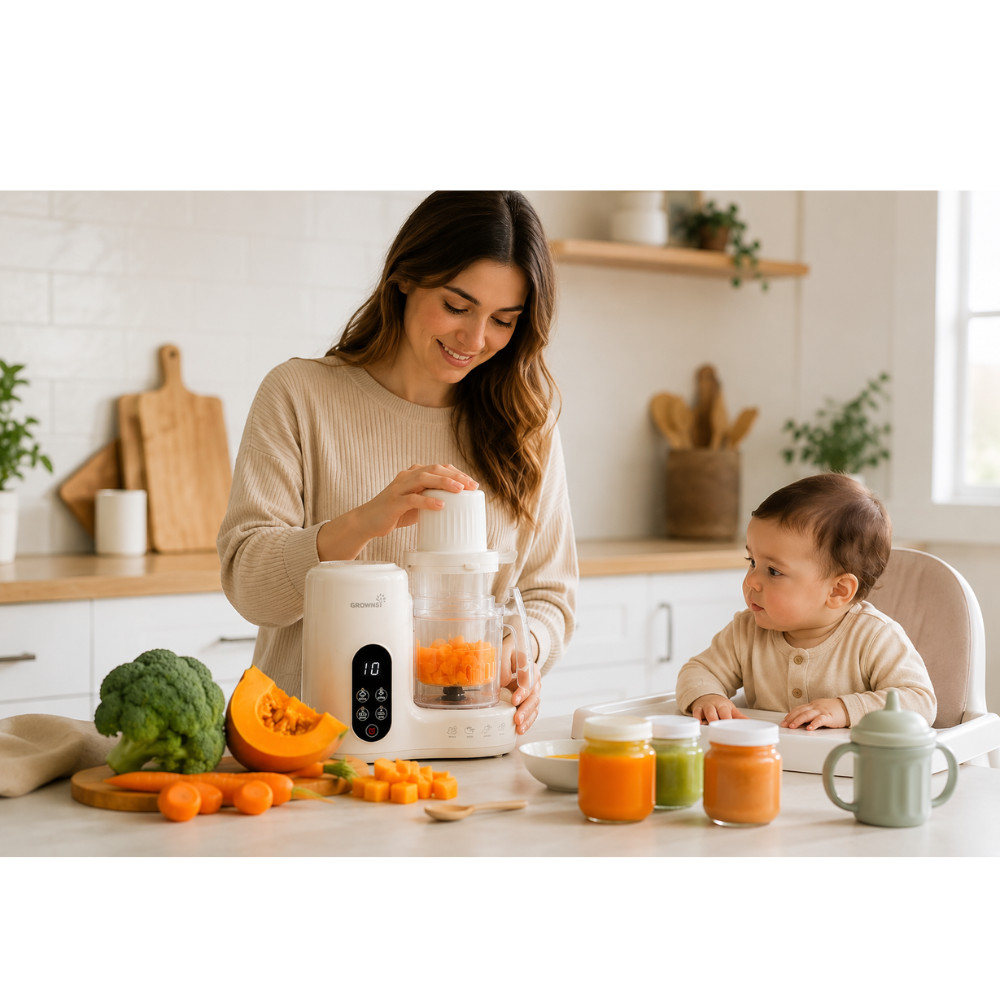
Starting solids creates an odd new kitchen job: prepare two tablespoons of food with the administrative burden of a holiday dinner.
Wash it. Cook it. Cool it. Blend it. Check the texture. Serve a heroic little smear. Clean several things. Repeat tomorrow because the baby looked at the broccoli as if it had arrived with legal papers.
Homemade food is not morally superior to a jar or pouch. It is simply one useful option. The problem is that variety can create repeat work, especially when every ingredient gets its own pot, steamer, blender, and cleanup.
The GROWNSY Baby Food Maker is interesting because its dual-layer basket can steam two ingredients in the same session before blending. The manufacturer also lists auto and manual blending for texture control, a sterilizer mode, a Tritan bowl, and detachable parts.
The machine cannot make a baby like peas. It can make trying peas less of a production.
The Dual Basket Solves a Scheduling Problem
Most baby food makers already promise to steam and blend. The dual basket changes the rhythm.
You can prepare two separate ingredients at once rather than running the machine twice. That might mean a familiar food in one compartment and a new food in the other, or two already-tolerated foods that you plan to serve separately, combine, or freeze in small portions.
Separate baskets do not automatically prevent allergen cross-contact, and they do not replace careful washing. If a child has a diagnosed food allergy or a clinician has given a specific introduction plan, use equipment and preparation methods that match that advice.
For everyone else, the time saving is plain: one steaming window instead of two.
Variety Does Not Mean Chaos
CDC guidance on introducing solids places the usual starting point at about six months, when a baby is developmentally ready. Readiness includes head and neck control, sitting alone or with support, bringing objects toward the mouth, and swallowing food rather than pushing it straight back out.
The CDC also recommends starting with one single-ingredient food at a time and waiting several days between new foods so reactions are easier to identify. That advice can sound incompatible with a two-basket machine. It is not.
One basket can hold the new food. The other can hold something the baby has already eaten safely. Or both can hold familiar foods for later meals. The machine saves a cooking session; it should not rush the introduction plan.
Texture Is the Real Work
Early feeding is not a permanent purée phase. The texture should develop as the baby's skills develop.
The GROWNSY offers automatic and manual blending, which matters more than a long list of recipes. Blend longer for a smoother result at the beginning. Pulse less as the baby becomes ready for thicker, lumpier textures. The goal is not to make everything perfectly silky forever. The goal is to prepare food that matches the child's current eating ability and then move forward safely.
The CDC advises preparing foods so they are soft and developmentally appropriate, changing texture as skills grow, avoiding choking shapes, serving small portions, and watching the child while they eat. A machine helps with cooking and blending. An alert adult still handles the safety decisions.
A Realistic Prep Session
The efficient version looks something like this:
- Choose one or two ingredients that fit the baby's introduction plan.
- Wash, peel, pit, and cut them as needed.
- Place them in separate basket layers and steam until properly soft.
- Blend each to the texture the baby can manage.
- Serve a small amount and cool, store, or freeze the rest using safe food-handling practices.
- Clean the bowl, basket, lid, seals, and blades according to the manual.
That is still work. The machine reduces transfers and duplicate steaming; it does not hire a kitchen assistant.
Where It Earns the Counter Space
This model makes sense for families who:
- expect to prepare homemade baby food several times a week
- want to cook two separate ingredients in one session
- prefer a dedicated appliance over using the family blender
- want direct control over texture and ingredient combinations
- have enough counter or storage space to keep the machine accessible
It makes less sense if you already own a steamer and a small blender you like, rely mostly on soft family foods, prefer store-bought options, or know that another dedicated appliance will spend its life behind the slow cooker.
Do Not Buy It to Win at Feeding
Babies reject food. They make faces. They accept something on Tuesday and treat it as betrayal on Thursday.
CDC guidance on food variety encourages a range of vegetables, fruits, proteins, grains, healthy fats, and appropriate dairy as skills develop. Offering variety matters. Forcing variety does not.
The useful goal is repeated, low-pressure opportunity. A dual basket can make those opportunities easier to prepare. It cannot control appetite, temperament, teething, illness, or the powerful politics of the high-chair tray.
The Decision
The GROWNSY Baby Food Maker with Dual-Layer Steam Basket is a good fit when the bottleneck is repeat cooking. Two ingredients, one steaming session, adjustable blending, fewer transfers.
It will not remove the need to learn readiness, allergen, texture, choking, and storage guidance. It will not make homemade food compulsory. It simply makes one version of the work more organized.
That is enough. Starting solids already comes with a baby, a high chair, a floor that needs wiping, and several strong opinions from people who are not cleaning any of it. The appliance only needs to save time.
Keep reading
Two useful next stops.
2026-07-11
Homemade Baby Food Without Turning the Kitchen Upside Down
A clear look at the Grownsy NutriChef steam-and-blend workflow, texture control, cleanup, and whether a dedicated baby food maker fits your routine.
2026-03-20
How to Warm Baby Milk Safely Without Turning It Into a Guessing Game
A practical look at bottle warming, safe milk handling, and the small setup changes that make night feeds easier.