SoftNest Journal
Diaper Changes 101: Keep Baby Clean & Rash-Free
A simple, first-time-parent guide to diaper changes: how often to change diapers, when to use wipes, how to clean gently, what diaper cream actually does, and when a rash needs medical attention.
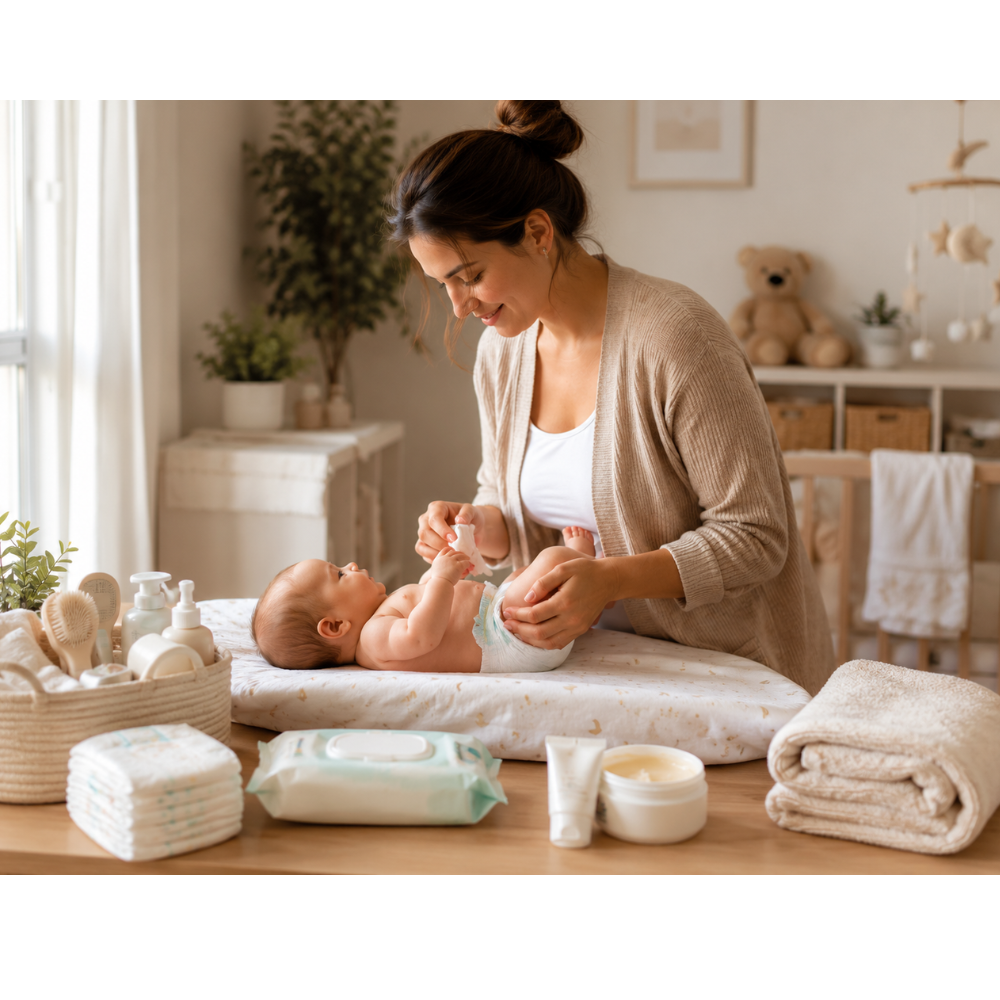
It usually starts with a very small person and a surprisingly large question: how can one diaper change involve this many decisions?
How often should you change a baby? Do you need wipes every time? Which wipes are actually gentle? Should diaper cream be part of every change, or only when there's a rash? And when redness shows up, is it ordinary irritation or something that needs more attention?
The practical answer is simpler than the diaper aisle makes it seem.
The goal is to keep baby's diaper area clean, dry, comfortable, and protected without turning routine care into a full skincare project.
This guide walks through the basics of diapers, wipes, diaper rash, diaper creams, and everyday diaper-changing hygiene in a way that's useful when you're tired and holding a baby with very strong opinions.
Why diaper hygiene matters
Baby skin is delicate, especially in the first months. The diaper area deals with moisture, urine, stool, friction, and warmth all day long. When those sit against the skin for too long, irritation and diaper rash can follow.
One of the most effective ways to protect baby's skin is also the least fancy: change wet and dirty diapers regularly and clean the area gently. Pediatric guidance also recommends limiting prolonged contact between urine or stool and the skin.
You do not need a complicated routine.
Good diaper hygiene usually comes down to:
- Frequent diaper changes
- Gentle cleaning
- Keeping the area dry
- Using the right diaper size
- Protecting irritated skin when needed
- Knowing which products to skip
How often should you change your baby's diaper?
Newborns can go through 10–12 diaper changes per day, while older babies may need more like 6–8. Every baby is different, so this is less about hitting an exact number and more about paying attention.
Change the diaper:
- As soon as possible after a bowel movement
- When the diaper is very wet or full
- Before bedtime
- After waking, when needed
- Whenever baby seems uncomfortable
You usually do not need to wake an older sleeping baby just because there may be a small amount of urine in the diaper, unless your healthcare provider has advised otherwise or your baby's individual needs make that necessary.
Poopy diapers need quicker attention
Try to change a bowel movement as soon as reasonably possible. Stool contains digestive enzymes that can irritate baby's skin if it stays in contact too long.
Choosing a diaper that actually works
There is no universal best diaper. One baby may do beautifully in a certain brand, while another gets leaks, rubbing, or irritation from the same one.
Instead of chasing a label, focus on fit and function.
Look for good absorbency
Keeping moisture away from the skin helps reduce prolonged wetness.
Make sure the size is right
A diaper that is too tight can rub and leave marks. A diaper that is too loose can leak.
A useful check: you should generally be able to fit about two fingers between the diaper and baby's tummy once it's fastened.
Check the leg area
The elastic should not dig deeply into the skin. Pull the leg ruffles outward rather than leaving them tucked in, which can help prevent leaks.
Pay attention to your baby's skin
If a rash keeps appearing after a change in diapers, wipes, or creams, your baby may be reacting to an ingredient or material. Trying a different product may help, and persistent reactions are worth discussing with your baby's healthcare provider.
Disposable diapers or cloth diapers?
Both can work well. This is not a moral test, despite what the internet occasionally suggests.
Disposable diapers
Parents often choose them because they're:
- Convenient
- Highly absorbent
- Easier for travel
- Easier for daycare and outings
- Simple to dispose of
Cloth diapers
Parents may choose them because they're:
- Reusable
- Potentially less expensive over time
- A way to reduce disposable waste
Cloth diapers usually involve more washing and may need more frequent attention to moisture.
Choose the option that fits your family, budget, and routine. A good diapering system is the one you can actually keep up with.
Baby wipes: what should you look for?
Wipes seem basic, but they are used often on sensitive skin, so it's worth choosing them carefully.
For routine diaper care, pediatric guidance recommends fragrance-free wipes or plain water. Alcohol-free and fragrance-free wipes can also be gentler when baby's skin is irritated.
A good baby wipe should ideally be:
- Fragrance-free
- Alcohol-free
- Gentle on sensitive skin
- Moist enough that you don't need to scrub
The point is not to make baby smell perfumed. It is simply to remove stool and dirt gently.
Do you need wipes after every wet diaper?
Not always.
For a simple wet diaper, you do not necessarily need to wipe repeatedly. The American Academy of Pediatrics notes that urine generally is not very irritating by itself, and modern absorbent diapers reduce how much urine stays directly against the skin. A damp washcloth or water can also be used when appropriate.
After a bowel movement, though, clean the diaper area thoroughly. Pay attention to skin folds where stool can hide.
If baby's skin is already irritated, too much rubbing can make things worse. Use gentle wiping or rinse with warm water, then pat rather than scrub.
How to clean a baby girl during a diaper change
For baby girls, wipe:
Front → back
This helps reduce the chance of moving bacteria from the rectal area toward the vagina and urinary opening.
Clean gently around the outer genital area and skin folds. There is no need to scrub.
How to clean a baby boy during a diaper change
Clean gently around the:
- Penis
- Scrotum
- Skin folds
- Bottom
For an uncircumcised baby, do not force the foreskin backward. Clean only the outside.
And one practical warning that many new parents learn the lively way: some baby boys urinate as soon as the diaper comes off. Keeping a clean diaper or cloth nearby can save you from an unexpected mid-change surprise.
What is diaper rash?
Diaper rash is very common. It usually appears as pink or red irritated skin in the area covered by the diaper.
Common causes include:
- Staying in a wet diaper too long
- Stool staying against the skin
- Diaper friction
- Diarrhea
- Sensitive skin
- Fragranced wipes or creams
- Antibiotic use
- Yeast
- Occasionally bacterial infection
A diaper rash does not automatically mean you've done something wrong. Even babies with excellent diaper hygiene can get one.
What does a typical diaper rash look like?
Mild irritation may look like:
- Pink skin
- Red patches
- Slight dryness
- Tender skin
- Mild discomfort during cleaning
A basic irritant diaper rash often affects the areas directly touching the diaper, while the deeper groin folds may be less affected.
Not every rash is the same, though. If a rash is bright red, spreading, developing bumps, sores, or blisters, or steadily getting worse, it deserves closer attention.
What should you do when baby develops diaper rash?
When a rash shows up, the first steps are usually the simple ones.
1. Change diapers more often
Do not let urine or stool sit against irritated skin any longer than necessary.
2. Clean very gently
Try:
- Warm water
- A soft washcloth
- Fragrance-free, alcohol-free wipes
If the skin is very sore, rinsing may be more comfortable than repeated wiping.
3. Let the skin dry
A little diaper-free time can help when practical. Even a few minutes gives moisture a chance to evaporate.
Pat the skin dry before putting on the next diaper.
4. Avoid fastening the diaper too tightly
Leave enough room so the diaper is not constantly rubbing irritated skin.
5. Add a barrier cream
This is where diaper cream can be especially helpful.
What does diaper cream actually do?
Diaper cream is not mainly about moisturizing. Its main job is to create a protective layer between baby's skin and urine or stool.
Two commonly recommended barrier ingredients are:
Zinc oxide
Zinc oxide forms a protective barrier over irritated skin and is common in diaper-rash pastes.
Petrolatum
Petrolatum, such as petroleum jelly, can also create a protective layer that helps keep moisture and irritants away from the skin.
Both are commonly recommended barrier options. For sensitive babies, fragrance-free products are often the better choice.
Do you need diaper cream at every diaper change?
Not every baby needs cream every single time.
If baby's skin looks healthy, frequent diaper changes and gentle cleaning may be enough.
Barrier cream can be especially helpful when:
- Baby already has mild irritation
- Baby often develops diaper rash
- Baby has diarrhea
- Baby will be in the diaper longer overnight
- The skin needs extra protection from moisture
Follow the directions on the specific product you're using.
A common diaper-cream mistake
When a baby already has a rash, it's easy to think every trace of old cream must be scrubbed away at each change.
That extra rubbing can make irritated skin angrier.
The American Academy of Pediatrics notes that if the existing barrier cream is still clean, you do not necessarily need to remove all of it. You can gently clean the soiled area and add another layer as appropriate.
Less rubbing can mean less irritation.
Products to avoid around the diaper area
More products do not automatically mean better hygiene. Often, simpler care works better.
Avoid heavily fragranced wipes
Fragrance can irritate sensitive skin. Fragrance-free is usually the safer choice.
Avoid alcohol-containing wipes on irritated skin
Alcohol can sting and dry already-irritated skin.
Avoid talcum baby powder
The American Academy of Pediatrics advises against talc-containing baby powder because inhaled talc can seriously affect the lungs and talc may be contaminated with asbestos.
You generally do not need powder for healthy diaper care.
Avoid antiseptics unless instructed
Routine antiseptic products are not necessary for ordinary diaper rash and may irritate delicate skin. The NHS specifically advises against using antiseptics on diaper rash.
Avoid random medicated creams
Do not automatically use:
- Antibiotic ointment
- Steroid cream
- Antifungal treatment
on every rash.
Different rashes need different treatment, and a product that fits one problem may not be right for another.
When diaper rash may be more than simple irritation
Sometimes a rash needs medical attention.
Contact your baby's healthcare provider if the rash:
- Is getting worse instead of better
- Isn't improving after approximately 2–3 days of basic care
- Has blisters
- Has open sores
- Is bleeding
- Has pus
- Develops yellow crusting
- Spreads outside the diaper area
- Is accompanied by fever
- Seems extremely painful
- Makes your baby seem unwell
Very young newborns with concerning rashes should be assessed promptly.
What about yeast diaper rash?
Yeast can sometimes cause diaper rash, particularly after antibiotics.
A yeast rash may appear bright red and involve the skin folds, sometimes with smaller red bumps around the main rash.
If you suspect yeast, or you're simply not sure what kind of rash you're seeing, contact your healthcare provider or pharmacist for guidance rather than guessing.
A simple diaper-changing routine
You do not need a row of twelve products lined up beside the changing table.
A basic routine can stay very simple.
Before the change
Have everything within reach:
- Clean diaper
- Wipes or warm water
- Changing pad
- Barrier cream if needed
- Clean clothes if needed
- Somewhere safe to dispose of the dirty diaper
Wash your hands before starting when possible.
During the change
1. Remove the dirty diaper.
2. Clean gently.
For stool, clean thoroughly and check the skin folds.
3. Let the area dry.
Pat instead of scrubbing.
4. Apply barrier cream if needed.
5. Put on the clean diaper.
Make sure it is secure without being too tight.
6. Wash your hands when finished.
Handwashing after diaper changes helps reduce the spread of germs.
Never leave baby alone on a changing table
This matters enough to say clearly.
Never walk away from a baby on an elevated changing surface.
Even if your newborn is not rolling today, that can change sooner than expected. Have diapers, wipes, cream, and clothes ready before you start.
If something you need is across the room, take the baby with you.
What should you carry in your diaper bag?
You do not need to pack the entire nursery for a quick trip out.
A practical diaper kit might include:
- 3–5 diapers depending on the outing
- Baby wipes
- Portable changing pad
- Small diaper cream
- One or two changes of clothes
- Disposable bags for dirty diapers or clothes
- Hand sanitizer for the parent when soap and water aren't immediately available
For longer outings, pack extra diapers.
A portable changing pad can be especially helpful because public restrooms do not always have a clean or available changing table.
→ [See our portable changing pad recommendation]
A simple diaper station at home
One organized spot can make newborn life much easier.
Keep:
Diapers + wipes + cream + spare clothes + changing pad
together.
You do not necessarily need an expensive changing table. A secure setup can be very simple. The important part is having what you need within reach and never leaving baby unattended.
First-time parent tip: don't buy too many newborn diapers
Newborn size seems like the obvious place to start before baby arrives. Sometimes it is. Sometimes baby is in that size briefly. Sometimes not at all for long.
Instead of buying months' worth, it can be more practical to have:
- A small supply of newborn diapers
- More Size 1 diapers available
- A few trusted wipe packs
Once you know which brand and fit work well for your baby, then it makes sense to stock up.
If one brand doesn't work, switch
Baby products are not one-size-fits-all.
One diaper may leak. Another may leave marks. One wipe may cause redness. Another may work much better.
You do not need to keep using a product just because it's popular online.
Watch your baby's skin. That is usually the most useful feedback.
The diapering essentials you actually need
If you're building a registry or shopping as a new parent, you probably do not need dozens of diapering products.
Start with the basics:
1. A good absorbent diaper
Choose the correct size and fit.
→ [See our diaper pick]
2. Gentle baby wipes
Look for fragrance-free and alcohol-free options for sensitive skin.
→ [See our baby wipes pick]
3. A barrier diaper cream
Zinc oxide or petrolatum are common options.
→ [See our diaper cream pick]
4. A portable changing pad
Especially useful for errands, travel, and everyday outings.
→ [See our portable changing pad pick]
That is enough for most everyday diaper changes.
What first-time parents really need to remember
If this still feels like a lot, shrink it down to five basics:
Change
Do not leave stool against baby's skin.
Clean
Use gentle products and avoid unnecessary fragrance.
Dry
Try not to let the diaper area stay constantly moist.
Protect
Use a barrier cream when the skin needs extra protection.
Watch
Pay attention to rashes that do not improve or look unusual.
That is the core of good diaper hygiene.
Final thoughts
Baby hygiene does not require the most expensive diaper, a crowded skincare shelf, or a picture-perfect changing station.
For most babies, simple care works well:
Clean diaper. Gentle wipe. Dry skin. Protective cream when needed.
Diaper rash will probably happen at some point, and it does not mean you have failed. Babies have sensitive skin, and irritation is common.
What matters is noticing it early, keeping the area clean and dry, protecting the skin, and knowing when something looks unusual enough to check with a healthcare professional.
And if you are still learning to do a diaper change without getting wipes, cream, and spare clothes involved all at once, that's normal too. It gets easier. Usually right after the stage when you thought you had finally mastered it.
Health and safety note: This guide is general education, not individualized medical advice. For current guidance, product instructions, and treatment recommendations, follow the advice of your local health authorities and your baby's qualified healthcare team. Care pathways and product recommendations may vary where you live. Seek prompt local urgent or emergency help if your baby seems seriously unwell, has fever with concerning rash symptoms, or you are worried about a rapidly worsening or severe rash.
Keep reading
Two useful next stops.
2026-04-25
Diaper Changes Without the Daily Drama
A practical diaper-changing setup that keeps wipes, cream, clothes, and cleanup where they belong instead of turning every change into a small search party.
2026-08-23
Starting Solids? What to Know About Using a High Chair Safely and Choosing One That Fits Real Life
A practical guide to when babies are ready for a high chair, which safety features matter most, how to keep cleanup manageable, and whether a convertible model is worth considering.