SoftNest Journal
Starting Solids? What to Know About Using a High Chair Safely and Choosing One That Fits Real Life
A practical guide to when babies are ready for a high chair, which safety features matter most, how to keep cleanup manageable, and whether a convertible model is worth considering.
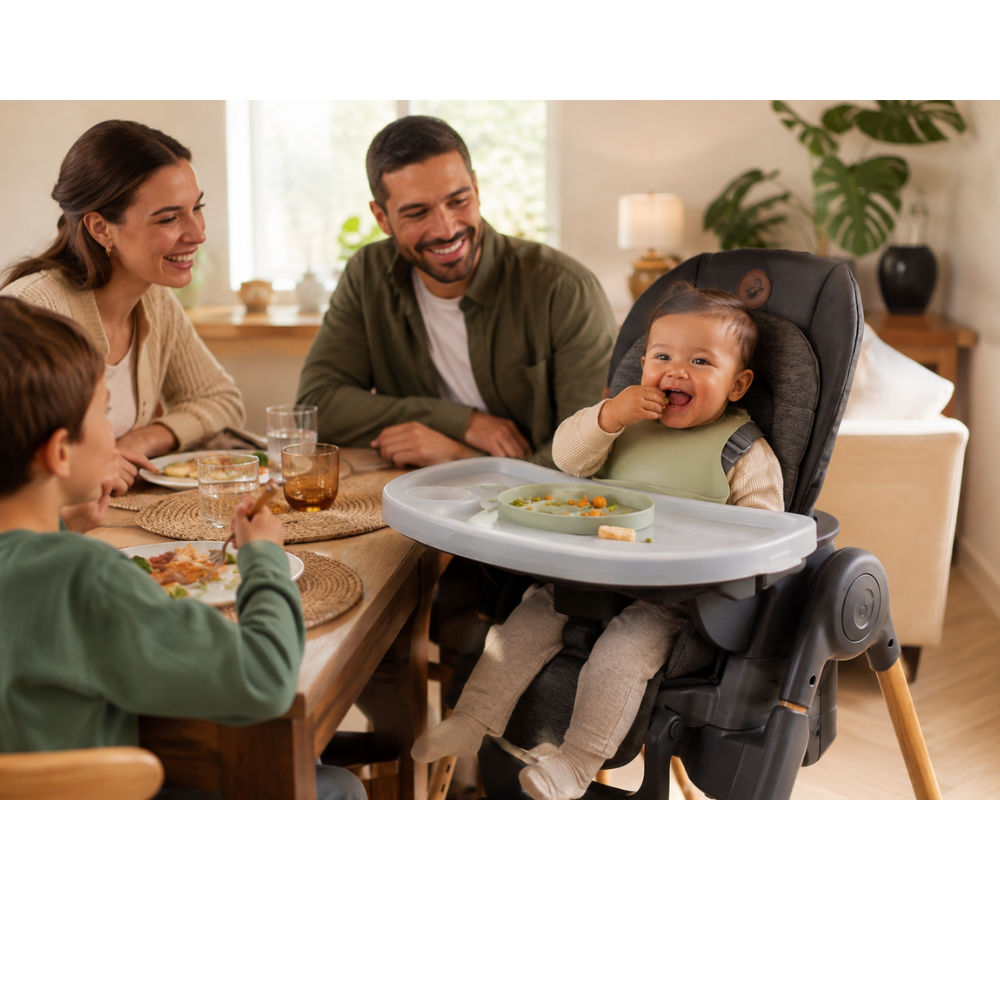
Starting solids has a way of making one simple question feel bigger than it should: where is this baby actually supposed to eat?
You can spoon-feed on your lap for a meal or two, of course. Then the yogurt lands on your shirt, the spoon gets grabbed midair, and suddenly a proper setup starts sounding less optional.
The short answer is this: once your baby is developmentally ready for solids and able to sit upright as required for the chair, a high chair gives you a safer, more manageable place for meals. It does not need to be fancy, but it does need to be stable, secure, and practical to live with.
Here’s what matters before you start.
When can a baby start using a high chair?
Many babies begin exploring solid foods at around 6 months old, but the calendar is only part of the picture.
The CDC recommends introducing foods other than breast milk or formula at about 6 months, when a baby is developmentally ready. Signs include being able to control their head and neck and sit upright with appropriate support.
For the high chair itself, Health Canada recommends using one only when your child is capable of sitting upright on their own.
Look for readiness, not just age
Before placing your baby in a high chair for meals, look for signs such as:
- Good head and neck control
- Ability to remain upright in the chair
- Interest in food
- Opening their mouth when food is offered
- Beginning to reach for or grasp food
- Swallowing food instead of automatically pushing it back out
Every baby develops differently. If you are unsure whether your baby is ready to begin solids, speak with their healthcare provider.
Do you really need a high chair?
You do not need the most elaborate chair on the market. You do need an appropriate, stable, and secure place for your baby to sit during meals.
That is the real job of a high chair. Everything else comes after that.
A good one can also make this stage noticeably easier.
Why a high chair helps so much in daily life
A dedicated place to eat
Feeding a baby in your lap can work in a pinch, but it gets awkward fast. Your baby shifts, reaches, arches, drops food, smears food, and somehow gets food behind both knees.
A high chair gives meals a defined home. Your baby can sit upright while you stay close and supervise, and the mess stays more contained than it would if mealtime wandered from couch to floor to your shirt.
Once solids become a regular part of the day, using the same spot for breakfast, lunch, or dinner can also make meals feel more predictable.
A seat at family mealtime
One of the nicest parts of a high chair has very little to do with gear.
Your baby gets to join the table.
Instead of eating off to the side, they can sit nearby, watch what everyone else is doing, and start learning the rhythm of family meals. That may be one reason an adjustable high chair can be convenient: it can often be positioned closer to the dining table.
A more manageable way to start solids
Purees, mashed avocado, yogurt, oatmeal, pasta—starting solids gets messy quickly.
That is normal.
Babies learn about food by tasting it, but also by touching, grabbing, and exploring different textures. The CDC notes that offering different textures and allowing babies to pick up foods can help develop skills such as grasping and chewing.
A high chair gives them one defined place to practice all of that. It won’t save your floor entirely, but it can stop the whole house from becoming the feeding zone.
Support for self-feeding
As your baby’s skills develop, they may start reaching for soft pieces of food, bringing food toward their mouth, and eventually learning to use utensils.
A tray gives your baby a reachable surface for appropriate foods. For parents using baby-led approaches, the American Academy of Pediatrics also recommends seating the child in a high chair and fastening the harness while they eat.
Whether you choose spoon-feeding, finger foods, or some combination of both, the goal is the same: give your baby a secure place to learn about food while an adult stays close and attentive.
High chair safety: what matters most
This is the part worth slowing down for.
A stylish chair is not automatically a safe one, and even a good chair only helps if it is used properly.
Use the harness every time
The tray should never be treated as the restraint system.
Health Canada recommends using the high chair's harness every time to help prevent falls and entrapment. A safe high chair should include a waist restraint and a strap between the child's legs.
Even if your baby seems calm, buckle them in for every meal. Babies have a talent for choosing the exact moment you relax.
Never leave your baby unattended
A baby should never be left alone in a high chair, even briefly.
Stay close during meals and keep your baby where you can see them.
Do not let your baby stand or climb
As babies get stronger, they may try to stand, twist, or climb.
Never allow your child to:
- Stand in the high chair
- Sit on the tray
- Climb into the chair alone
- Climb out without help
Check that folding and adjustable parts are locked
If your high chair folds or adjusts, make sure everything has clicked or locked securely into place before your baby gets in.
The American Academy of Pediatrics also advises checking that folding chairs are properly locked every time they are set up.
Be careful where you place the chair
Don’t position a high chair where your baby can push their feet against a wall, table, or cabinet and potentially tip the chair.
Also keep it away from:
- Hot stoves
- Appliance cords
- Window blind cords
- Curtains
- Hot drinks
- Sharp objects
How to choose a high chair without overthinking it
There are plenty of models with long feature lists, but the basics matter more than the extras.
Start with safety, stability, and practicality.
What to look for
A secure harness Your baby should be properly restrained each time the chair is used.
A stable base A wider, sturdy base helps reduce the risk of tipping.
A locking mechanism Adjustable or folding components should lock securely.
Easy-to-clean surfaces Food will end up in corners, seams, straps, and places you did not know food could reach. Removable trays and washable seat materials can make cleanup less annoying.
An appropriate upright seating position Your baby should be positioned for feeding according to the chair manufacturer’s instructions.
An adjustable setup Height, tray, or footrest adjustments can make the chair easier to use as your child grows.
No loose pieces or sharp edges Regularly inspect the chair for damaged, missing, or loose parts.
Health Canada specifically recommends checking high chairs for stability, functioning locking mechanisms, restraint systems, smooth surfaces, and potential choking or pinching hazards.
How to keep a high chair clean without turning it into a project
The easiest approach is not a deep-clean marathon. It is a small cleanup after every meal.
If you wait until the chair looks truly awful, you are usually dealing with dried puree in the harness, sticky seams, and one mystery crumb that has become part of the furniture.
After every meal
Remove leftover food from the tray and seat.
Wipe:
- Tray
- Seat
- Harness area
- Footrest
- Armrests
- Any surfaces your baby touched
Always follow the manufacturer's cleaning instructions for the specific chair.
Check the hidden spots regularly
Food can collect:
- Under the tray
- Around the harness
- Between seat cushions
- Inside seams
- Around adjustment buttons
- Where the seat connects to the frame
These are easy to miss and worth checking before old food turns into a bigger cleanup job.
Wash removable parts as directed
If your chair includes a removable washable seat cover or dishwasher-safe tray insert, those features can make everyday maintenance easier.
Just make sure every component is completely dry before putting the chair back together, and follow the manufacturer’s instructions regarding machine washing or dishwasher use.
Use cleanup time as inspection time
A quick wipe-down is also a good moment to check whether the chair is still in good condition.
Look for:
- Loose screws
- Damaged straps
- Cracked plastic
- Torn fabric
- Wheels that aren't functioning correctly
- Locks that don't engage properly
- Loose or missing pieces
If something appears damaged, stop using the chair until you know it is safe.
What about a high chair that grows with your child?
This is where a convertible chair may make sense.
Baby gear gets outgrown fast, and some families would rather buy one chair that can adapt through more than one stage.
A convertible model can be useful if you want a chair that changes along with your child’s feeding and seating needs.
One example is the Maxi-Cosi Minla 6-in-1 High Chair.
Its multi-stage design allows it to transition between different feeding and seating configurations as a child grows. It also includes adjustable positioning and easy-clean features designed to make everyday mealtimes more manageable.
Affiliate disclosure: This post may contain affiliate links. If you purchase through one of these links, we may earn a commission at no additional cost to you.
When does a baby stop using a high chair?
There is no single age that applies to every child or every chair.
Instead, look at:
- Your child’s development
- Whether they can safely use the next seating stage
- The high chair’s weight and height limits
- The manufacturer’s instructions
Never continue using a particular high-chair configuration once your child has exceeded its stated limits.
Convertible chairs may offer additional seating modes for older toddlers or children, which can extend how long the product remains useful.
A simple high chair routine that makes meals easier
A useful routine can be very plain.
Before eating: Make sure the chair is stable and locked, place your baby in the appropriate upright position, and fasten the harness.
During the meal: Stay nearby, supervise continuously, and allow your baby to explore age-appropriate foods safely.
After eating: Remove your baby, wipe the tray and seat, clean food from the straps and floor, and inspect the chair for anything that needs attention.
That is enough. Small habits do most of the work here.
The bottom line
Starting solids can feel like a lot at first. There is new food to prepare, new textures to manage, spills to clean up, and the constant sense that you might be missing something important.
The right high chair will not stop the mess, and honestly, that is not the point. Babies are supposed to explore food.
What a high chair can do is give your baby a stable, dedicated place to take part in mealtimes while giving you a more organized setup for feeding and cleanup.
Choose based on safety and stability first. Then consider the convenience details that will matter in your actual home, like washable materials, adjustable positions, storage, and how long the chair may stay useful.
Some meals will go smoothly. Some will involve more food on the floor than in your baby. Both still count.
The goal is not a spotless mealtime. It is a safe, comfortable place for your baby to learn to eat alongside the family.
Health and safety note: This guide is general education, not individualized medical or safety advice. For questions about readiness for solids, feeding concerns, safe product use, recalls, or seat configuration limits, follow current guidance from health authorities and the manufacturer, and speak with a qualified healthcare professional where you live. If your child is choking, has trouble breathing, or has another urgent feeding-related emergency, seek local emergency help right away.
Keep reading
Two useful next stops.
2026-07-04
What Actually Makes a High Chair Good for Family Meals?
A practical guide to high-chair support, adjustability, cleanup, footprint, and whether the Momcozy DinerPal earns a place at your table.
2026-07-11
Homemade Baby Food Without Turning the Kitchen Upside Down
A clear look at the Grownsy NutriChef steam-and-blend workflow, texture control, cleanup, and whether a dedicated baby food maker fits your routine.